Managing Your Innisfil Property Waste and Recycling Properly

Imagine it's Tuesday morning in your Innisfil neighbourhood. You've just finished sorting through a week's worth of packaging, only to realize you aren't quite sure if that specific plastic container belongs in the blue bin or the black bin. We've all been there. Mismanaging your household waste doesn't just lead to messy bins; it impacts our local Innisfil waste management systems and our shared environment. Getting your sorting right ensures our community stays clean and that our local recycling facilities can actually process what we send away.
Proper waste management in Innisfil requires a bit of local knowledge. Whether you live in a newer development near Shoreline Drive or an older established neighbourhood in Cookstown, the rules for what goes where are specific to our municipality. This guide breaks down exactly how to handle your trash, recycling, and organic waste to keep our town looking great.
What are the Innisfil curbside collection schedules?
>The first step to being a responsible resident is knowing when the trucks are actually coming. Innisfil operates on a specific collection schedule that can vary depending on your specific street or even your neighbourhood zone. For instance, residents near the waterfront might have different patterns than those closer to the Highway 400 corridor. You shouldn't just assume it's the same day every week without checking.
The best way to stay on top of this is to use the official Innisfil Waste Management page. They provide detailed calendars that you can even sync to your digital devices. We recommend setting a recurring reminder on your phone for the night before collection to ensure your bins are out on the curb and ready to go. Remember, leaving bins out too early can lead to wind-blown litter in our local streets, which is something we want to avoid in our community.
How do I sort recycling and organics in Innisfil?
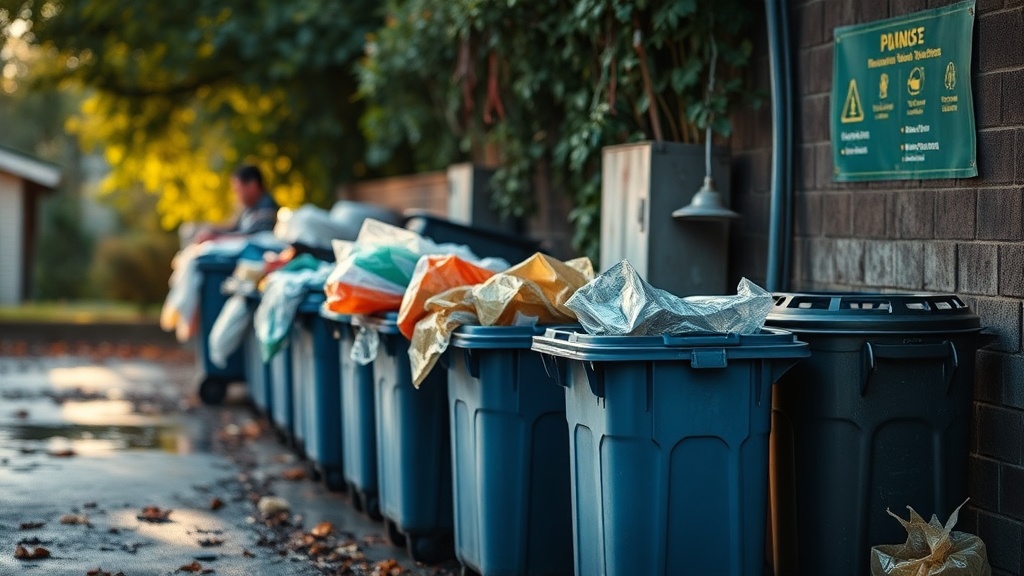
>Sorting is where most of us get a little confused. In our community, the blue bin is strictly for clean, dry recyclables. This includes certain plastics, paper, cardboard, and metal cans. However, if a pizza box from a local shop is soaked in grease, it doesn't belong in the blue bin—it belongs in the organic waste or the trash. Grease-soaked cardboard can contaminate an entire batch of recycling, making the whole load useless.
For organic waste, we have a specific system to handle food scraps and yard-waste. This is a huge part of keeping Innisfil green. Instead of tossing food scraps into your regular garbage, use the designated organic bin. This includes things like fruit peels, coffee grounds, and even certain compostable-labeled items. If you're unsure about a specific item, it's better to err on the side of caution and put it in the garbage rather than contaminating the recycling stream.
Common Mistakes to Avoid:
- Plastic Bags: Don't put loose plastic bags in the blue bin. They tangle the machinery at the sorting facility.
- Glass: Check the specific rules for glass jars and bottles to ensure they are accepted in your area of Innisfil.
- Dirty Containers: A quick rinse of your peanut butter jar goes a long way.
Where do I take large items or hazardous waste?
>We all have those "once a year" items—like an old broken chair, a broken lawnmower, or a container of leftover paint. You can't just leave these on the curb during your regular weekly pickup. Innisfil has specific protocols for bulky items and hazardous materials to prevent heavy metals or chemicals from leaching into our local soil and water.
For bulky items, you should look into the local Innisfil drop-off locations or specialized collection events. If you have old electronics (e-waste), many local retailers or municipal drop-off points are your best bet. For hazardous waste like old paint, pesticides, or heavy batteries, never put these in your regular trash or blue bin. These items require specialized handling to protect our local ecosystem. You can find more information on hazardous waste disposal via the Ontario provincial guidelines to see how these materials are handled across the province.
Living in Innisfil means being part of a shared space. When we all take the time to sort our waste correctly, we reduce the amount of trash sent to landfills and ensure our local recycling programs remain effective. It might take a few extra seconds each week, but it keeps our community clean and sustainable for the long haul.